Showing posts with label WW2. Show all posts

Wednesday, December 21, 2022

RCAF Women's Division, Depicted in "Lighting the Stars"

 The British Commonwealth Air Training Plan (BCATP) was one of Canada’s major contributions to the Allied cause. It graduated over 131,000 aircrew, almost 73,000 of them Canadians. 151 BCATP schools were established across Canada, with more than 100 new airfields constructed, thus becoming the world’s largest air training centre. U.S. President Franklin D. Roosevelt called Canada the “aerodrome of democracy”.


Because of the BCATP and its many training facilities, women were invited in July of 1941 to join the new Women’s Division of the RCAF to release men for combat. 17,000 eventually signed up, including a few of my characters.


Unfortunately, there was public prejudice initially that women in the Forces weren’t quite respectable. There were actually fewer unwanted pregnancies among the RCAF women than in the general population.


In part to dispel the myths about women in the military being immoral and as a recruiting strategy, the fledgling National Film Board made a 10-minute documentary in 1943 about the RCAF Women’s Division, called “Wings on her Shoulder”. The NFB docs were shown in movie theatres before the main attraction. This one is available for free viewing from the NFB online, and gives an excellent overview of the training and jobs that the women did.


The RCAF Women or WDs, as they were called, worked in 69 different trades - everything from cooks and wireless operators to aircraft mechanics and operational clerks who plotted the locations of ships and planes, as shown here.


WD photographers dealt with aerial cameras that weighed up to 45 pounds. They had to install them in airplanes, teach the crews how to use them, and then develop the film. One girl said she would generally process 11 miles of camera-gun film a month.


But they also documented the people and activities of the RCAF in Canada and Britain, including one of my characters. This looks like it’s outside Buckingham palace. The photographers stationed in London took photos of Canadians receiving medals from the King, and any other RCAF personnel and activities, including weddings. And taking photos of graves for the families back home.


Here are three of the London WDs with their Speed Graphic cameras.


But London was a dangerous posting. I have a WD photographer who is involved in a V-1 rocket attack in 1944 between the Air Ministry’s Ad Astral House and BBC’s Bush House. 48 were reported killed at the time, including several WAAFs  - the British equivalent of the RCAF,WDs – who had been sunbathing on the roof or sucked out of the windows by the blast. You can see one of the "lucky" WAAFs in this photo. Estimates are now closer to 200 deaths.


In the memoirs I read, it seemed that most of the WDs wanted to be posted overseas and earn the Canada flash on their uniforms, like this lady, whose letters to a friend in Canada provide priceless information about everyday life in the RCAF in Canada and Britain.


It was originally thought that it would take 3 women to replace 2 men, but in practice it was a 1 to 1 ratio in most jobs, and even 2 women replacing 3 men in some cases. Although they never earned equal pay for equal work, that did increase from 66 % to 80% of men’s wages over the years.


The WDs did a great service to our country, but many never spoke of their roles after the war, even though they thoroughly enjoyed themselves. A friend’s mother told me she was just "doing her bit", like everyone else.


Tuesday, December 20, 2022

German Prisoner of War Camp 20 in Gravenhurst, Depicted in "Lighting the Stars"


Here I am at the exact spot where "Lighting the Stars" begins. 


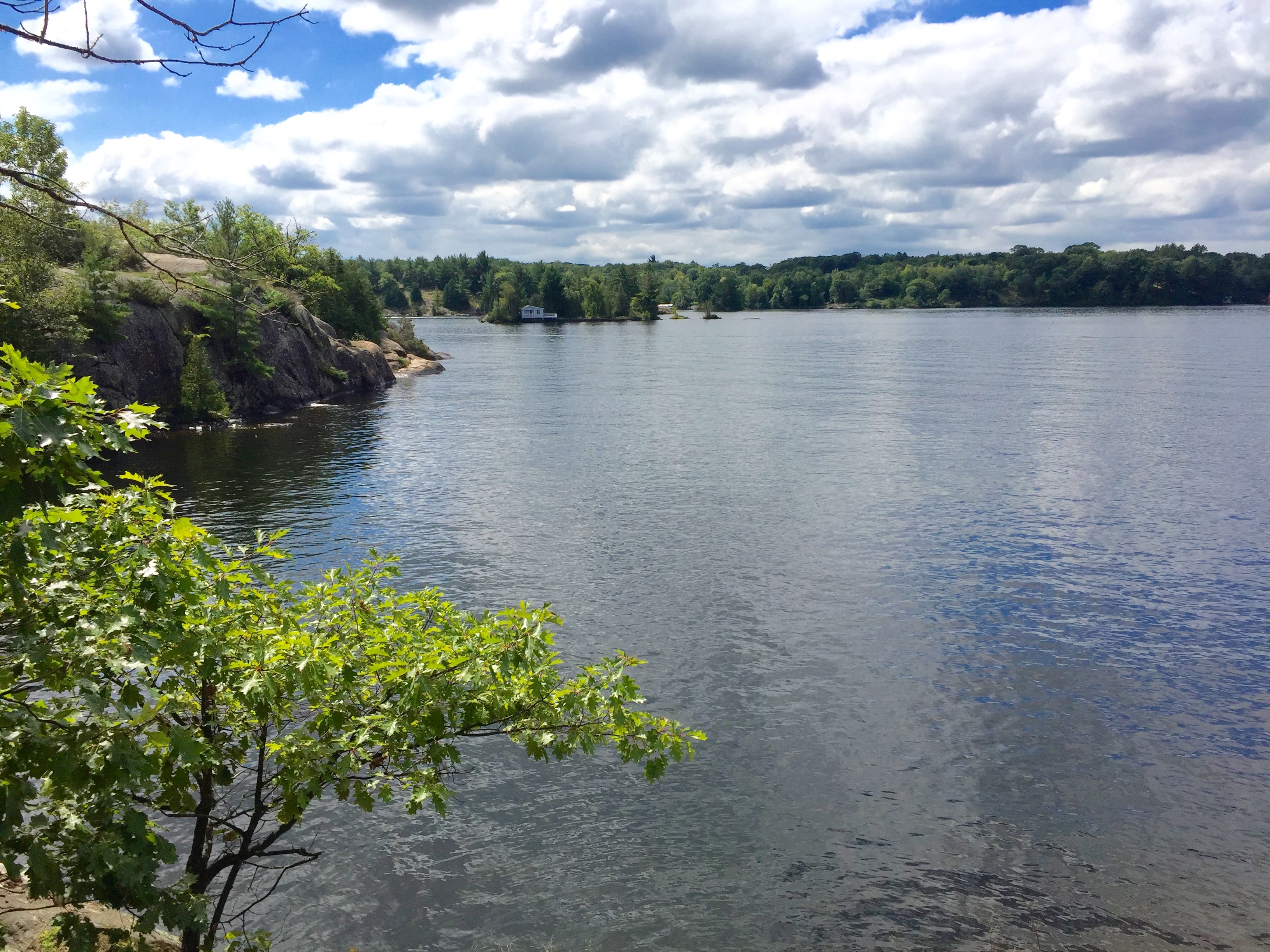
This shows the view from that cranny. Merilee's home - fictional Hope Cottage - lies on the other side of that rocky promontory.


This is now Ungerman Park, which is part of the larger site of the sanatorium-turned-POW camp that actually existed here in Gravenhurst. If you go into the park at the waterfront entrance (at the west end of Lorne St.), you'll see a large board with photos and descriptions about the camp.


It's a lovely spot to ramble. And you can swim at the same beach that the POWs did.


Here's an aerial view of Camp 20. The boom fence delineated the prisoners' swimming area. The house at the bottom of this photo could have been Merilee's fictional home, although different in style. If you look carefully, you can see the top of another house at a clearing just beyond the mass of trees on the right, before the next bay. I used that as the Wildings' house.


The red-roofed building - the former private Calydor Sanatorium, which closed in 1935 - was where the German officers were housed, as seen below.


The old sanatorium building housed the German officers' quarters, classrooms, infirmary, kitchen, canteen, games and exercise rooms, library, mail room, and so on.  With an average of around 400 prisoners in the camp at any one time, you can see that the area for them to play sports in the grounds was limited.


This map shows the layout of the camp. The main prisoner enclosure is relatively small - buildings 1, 2, and 3 -  the rest were for the Veterans Guards and Canadian military personnel, with #7 being the Canadian officers' complex.  #15 right next to the outer fence was the detention centre. Building #10 is listed as "private residence", which is what I used for the Wildings' home. 


Here is the beach where the German POWs swam. You can see from the colour aerial photo above that the boom fence goes well beyond that rocky bluff. In this photo you can see a prisoner diving into the water at bottom left, and a few more awaiting their turn. The guards, like the one at the top right, might well have been envious of their charges frolicking in the lake on a hot summer’s day.


The concept of “parole” seems strange in the context of war. The German officer POWs at Camp 20 were obliged by their loyalty to the Fatherland to try to escape while in their prison compound. But if they gave their “parole” – promise not to escape – and were let out to swim, skate, work on their farm, etc., then they were honour-bound to adhere to that or face execution for dishonourable conduct back in Germany after the war.


There was a reciprocal agreement with Germany that the Canadian prisoners there could also get out on parole.


In these photos we see the POWs on parole skating – some in their prison garb with a big red circle on their backs – in front of the civilian house (#10 on the map) that was within the outer boundaries of the camp, and which I used as the Wildings' house.


This photo shows the POWs at their farm, which was a few miles from the camp, and which not only provided them with fresh food, but also with a sense of freedom to work the land, fish and bathe in the nearby stream, and even wander into the surrounding woods alone for short periods.


As many as 100 men at times would daily be marched the 3 miles each way by a couple of unarmed Guards.


I was lucky enough to find 3 fascinating English memoirs from Germans who had been interred at Camp 20. Two of them loved it so much here that they emigrated to Canada after the war. One of them appears to be the guy on the very right, who ended up owning a cottage in Muskoka.


Here we see POWs being marched through the streets of Gravenhurst to their "Gilded Cage". That's the title of the excellent and well illustrated history of Camp 20 written by Cecil Porter.


After the war, the property became the Gateway Hotel, which, ironically, was the largest Jewish resort in Canada. But it also welcomed former POWs, who had fond memories of Muskoka. Here you see a former prisoner’s wife and son.


Over 35,000 German troops were sent to camps in Canada6000 of them asked to remain here, but had to be repatriated first. Many did eventually immigrate once Canada opened its borders to them in 1951.


Vintage photos courtesy of Gravenhurst Archives and National Archives of Canada

Colour photos at top, copyright Gabriele Wills and Melanie Wills


Thursday, January 28, 2021

The New Novel & the Book Nook Giveaway to Celebrate It!


Lighting the Stars
Book 4 of The Muskoka Novels - Lighting the Stars - is now available! It's a "riveting tale of a generation torn apart by war."

Find out more about it on my website.


Instead of a book launch, we're having an exciting contest to raise awareness of the novel and have some winter lockdown fun!

The prize is the complete collection of my 6 epic historical novels, signed and presented in a classy, handmade, Canadian, upcycled eco-bag from Echoes in the Attic - a $218 value!


To enter, take a picture of your favourite reading nook showing a copy of the new book, Lighting the Stars, or any of my novels.

If you don't have any, put a sign on your reading chair stating "Ready for Lighting the Stars and the rest of the Gabriele Wills collection".

Post your photo on FaceBook, tagging me at Gabriele Wills Author of The Muskoka Novels, or on Twitter using @GabrieleWills, or on Instagram using @muskokanovels, and any appropriate hashtags, as well as  #TheMuskokaNovels.

To ensure that I have your contact info, email me at books@mindshadows.com with a link to your online photo, and your name will be put into the draw.

If you're not on social media, you can still enter by sending me an email with your Book Nook photo and permission for me to post it on my FB Author's Page with your name - just your first if you prefer.

The prize!


Draw Date: Valentine's Day

Sorry, this contest is only open to North Americans because of shipping costs. Watch for an international e-book giveaway in a few weeks!

Here's my Book Nook. Show me yours!


Friday, June 30, 2017

An Immigrant’s Thanks

Happy 150th to my home and chosen land!

As a three-year-old immigrant, I didn’t have a choice, of course. But my parents did, and I’ve been forever grateful to them for that decision.

The happy immigrants in Niagara Falls, 1956
They grew up in Hungary - my dad in a pastoral village nestled in the hills northwest of Budapest, and my mom, in a German community far away in the south. Chances are they would never have met had the war not intervened and dramatically changed their lives.

He was 11 and she was 8 when conflict broke out in 1939. My mother’s family just happened to be in Austria, where my grandfather was working temporarily, and they never saw their homeland again.

In 1944, my 16-year-old father was snatched off the street by a passing army unit, and pressed into military service. My grandmother didn’t even know what had happened to him. Sent to Poland with a gun and no training, he was soon a prisoner of the Russians, and lucky to survive.

In Austria, my 14-year-old mother was terrified to be strafed by machine-gun fire from an Allied plane in 1945. She was nonetheless grateful when the Americans liberated them from the Nazis shortly thereafter.

The Potsdam Agreement drafted by the victorious Allies in 1945 instigated “the largest forcible population transfer in human history” and “one of the largest episodes of mass human rights abuse in modern history”.  [R.M. Douglas, Orderly and Humane: The Expulsion of the Germans After the Second World War]   Between 12 and 14 million ethnic Germans were expelled from Hungary, Poland, and Czechoslovakia. They lost their citizenship, livelihoods, homes, and all possessions aside from what each person could carry in one suitcase.

My dad’s family had lived in their village for many generations, his father even having to change his surname to something Hungarian because he was a civil servant. He chose “Tavaszi”, meaning “spring”. Among the many relatives married to ethnic Hungarians and therefore not evicted were my widowed aunt and her three children – much to their dismay when they became imprisoned behind the Iron Curtain. They eventually escaped.

My mother’s entire hamlet was “cleansed”, and when we visited it two decades later, it was a ghost town: soulless houses – many of which my grandfather had built – weathered doors hanging off broken hinges, windows shattered, animals nesting among the ruins; the cemetery overgrown, barely discernible; my grandparents little farmstead reclaimed by nature. No voices or footsteps other than ours. It was decidedly creepy, but also terribly sad.

The two displaced families became neighbours in former army barracks in the medieval, storybook town of Mosbach, Baden, near Heidelberg. Each family had one room for living, cooking, bathing, and sleeping.

With the influx of so many millions more to feed and house in a defeated land already starving and bombed out, survival was a challenge. I grew up with stories about trading the few remaining family heirlooms and jewellery for food, of carrying heavy bags of nuts scavenged from the forest to a farmer in exchange for a slab of butter or a sack of flour, of daring to steal a few cherries off a tree, to be chased and scolded by the property owner.

But I also heard about the frequent dances held in the barracks compound. The young could make their fun anywhere, but for my grandparents it must have been devastating to have lost everything. It became even worse when three of my aunts died of tuberculosis. Malnutrition undoubtedly contributed.


My parents, Katie and Paul Tavaszi, 1949
My dad was just 21 and my mom, not yet 18 when they married, already planning their escape to a better land. My mother had aunts in the U.S. Perhaps they could go there? But the States wouldn’t take them. Canada sounded good.

I was born in the barracks. When I was three, my family finally had the paperwork to immigrate to Canada, but my father had to go over first and have a steady job for at least three months before we could join him.

My 23-year-old mother had $5 in her pocket and only a smattering of school English when she and I arrived in Montreal on a gloomy October day in 1954. She was appalled to receive a telegram from my dad instructing her to get on a train to Lindsay, Ontario - where the heck was that? - instead of Delhi. He’d been working in the tobacco fields for a Hungarian farmer whose son had started a new business in Lindsay, manufacturing TV antennas. My dad had messed about with radios and such as a boy, and wanted to become an engineer, so here was this amazing opportunity, which did indeed work out.

Having left behind the romantic, hilly countryside of southern Germany, jewelled with ancient towns and stately castles, my mom grew increasingly worried and depressed as the train sped us through long stretches of wilderness and swamps, past villages that resembled frontier boomtowns in cowboy movies, and along a sluggish river, finally depositing us at a railway station where my dad waited, excited to show us the wonders of our new home. My mother loved the movies, so he insisted we weary travellers go to the cinema that evening. I think she was still in shock.

I explored these feelings of displacement, of seeking a better life, of facing daunting challenges in a strange and sometimes hostile land in my novel about pioneer Upper Canada,  A Place to Call Home, which is dedicated to my parents, who were pioneers in their own right.

They both worked at Lindsay Antenna, but on different shifts so that one would always be looking after me. When there was overlap time, I was in the factory, tasked with sweeping floors – as a four-year-old. Should I put that on my resume?

I have only wisps of memories of my first three years in Germany, the most powerful being the distinctive taste of the ice cream there. So my real life began when we arrived in Lindsay, which became my parents’ permanent home, and mine for several decades. Most townspeople embraced us warmly, often with great generosity. Dr. Broadfoot charged us little or nothing at all in those early, pre-OHIP days, when doctors still made house calls day or night.

My friend's father had been captured by the Germans at Dieppe, and spent the rest of the war in a POW camp. But I always felt welcome at their house and cottage – which inspired my Muskoka Novels. I dedicated Book 3, Under the Moon, to them.

But we did experience prejudice. Even when I was in high school, I was sometimes jeered as a Nazi.

These themes are part of the adventurous kids’ novel that I co-authored with my daughter, Melanie, who also grew up in Lindsay. The Girl From No-Man’s-Land is set in 1963 “Launston Mills” (AKA Lindsay, as per A Place to Call Home), and is currently seeking a publisher.

Obviously, Lindsay and Canada have shaped my life and career. My novels, which bring Canadian history vibrantly to life, are as much a tribute to my beloved country as they are my joy and pride.

Travelling abroad always reaffirms for me what a truly wonderful and respected country we live in. As a 13-year-old, I was shocked by the menacing soldiers with machine guns on every corner in Budapest, then under communist rule. Visiting the dispirited relatives on both sides – the teens thrilled to receive “American” blue jeans – I was so glad that my parents had been kicked out of Hungary. For many years we sent care packages, which always included those treasured jeans. My parents were careful with every penny, and there was no extravagance in those days, but I realized that in comparison to Hungarian cousins, we lived in a land of plenty and opportunity, and so we were indeed the “rich relatives”.

When my husband, daughter, and I visited northern France in 2007 on one of my research trips, an elderly Frenchman thanked us profusely, with tears in his eyes, for helping to liberate France. The people of Ypres (Ieper) Belgium were equally friendly and grateful for Canada’s heroic contributions in the previous war.

Although my birth to “Displaced Persons” happened in Germany, my mind, heart, and soul are truly Canadian. I’m so lucky, and deeply thankful to my adopted country!